
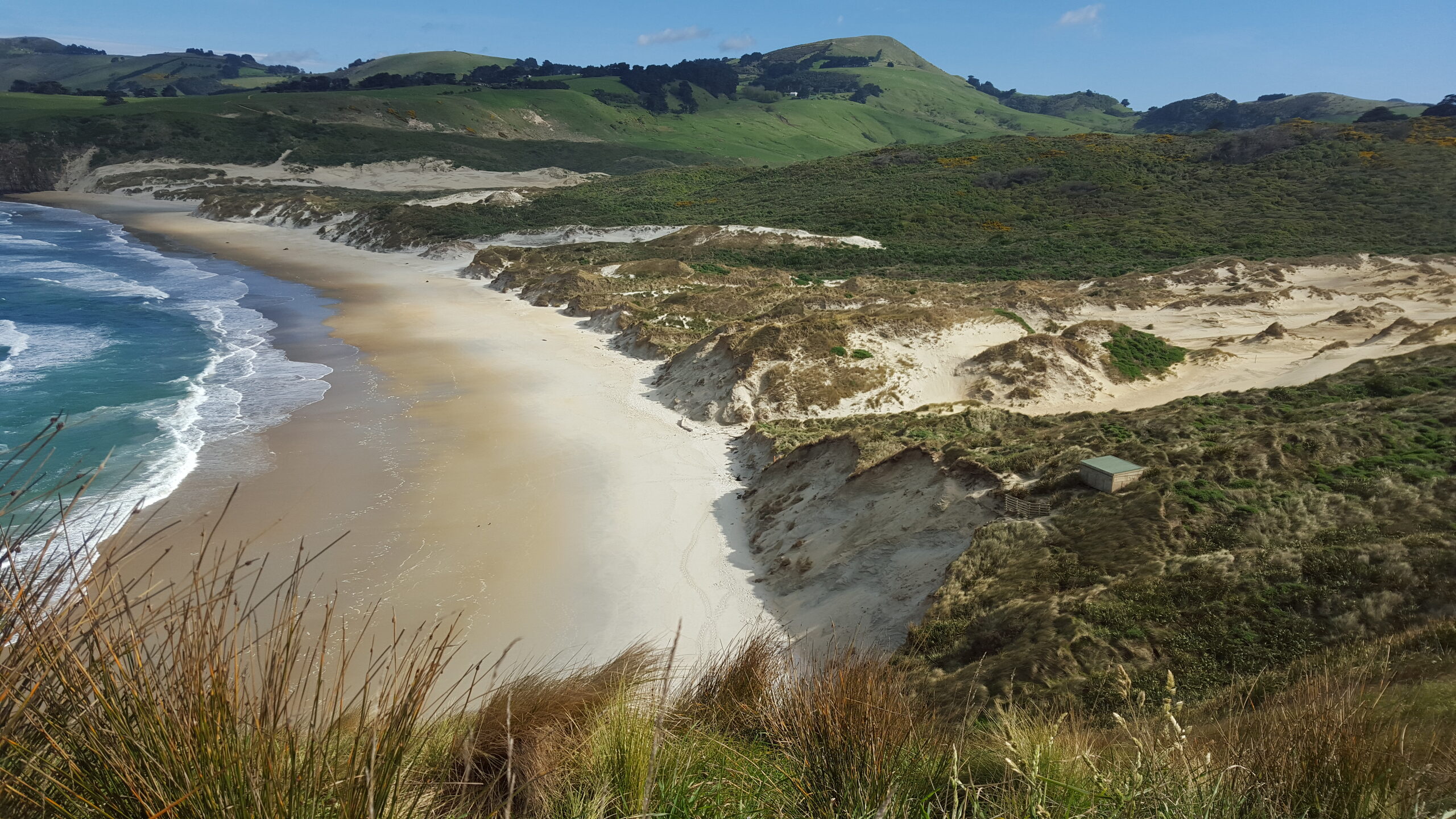
The wildlife of the Otago Peninsula
New Zealand is home to unique, and in many cases endangered, wildlife. Here is a guide to some of the animals you might encounter on a tour with Back to Nature.
One of the largest seabirds in the world, with a wingspan of nearly 3.3 metres. Taiaroa Head is home to the only mainland breeding colony on Earth. Albatrosses spend more than 80% of their lives at sea and are said to carry the ‘souls of sailors’. They use very little energy to cover huge distances — their narrow, cambered wings act as an aerofoil, like a glider’s, while a shoulder-lock tendon braces the wings. They face into the wind to gain height, then coast in a wide, descending loop; in stormy seas they gain lift from wind deflected upwards by the waves.
Arguably the rarest of the world’s 18 penguin species and endemic to New Zealand. The ‘mountaineers’ of penguins, they can travel hundreds of metres from the sea and up steep terrain to nest in coastal dune vegetation, shrubland and forest, away from other birds. They fish during the day and return before dusk year-round. Usually they mate for life. The nest is built in August and two eggs are laid in September/October. These birds are extremely shy, so viewing hides have been built to watch them.
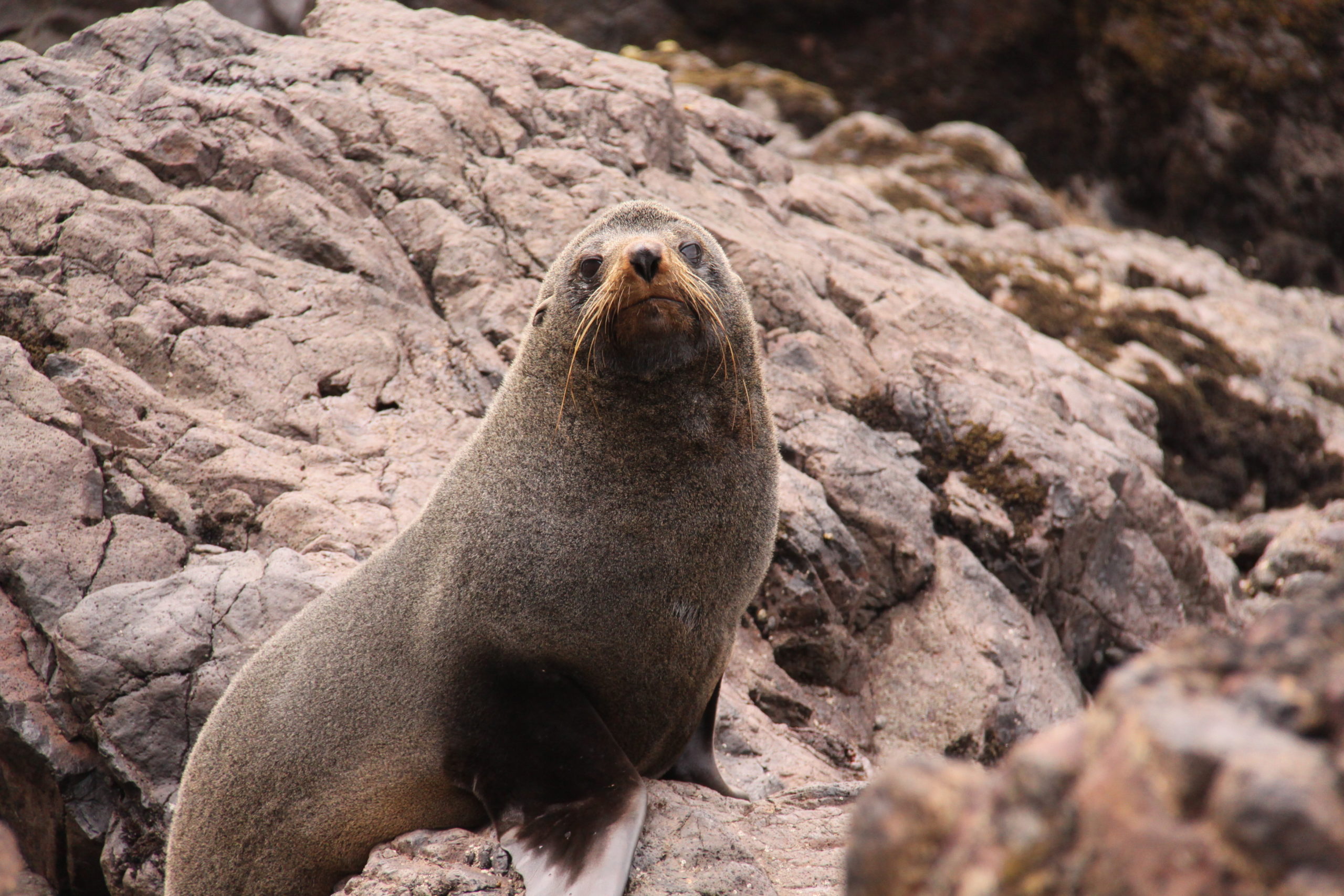
Hunted to near extinction for their skins by early European sealers, the NZ fur seal is now a wildlife success story. Their population has increased dramatically and they can again be seen around the South Island coastline and offshore islands.
Males set up territories in late October and defend them with force — the bigger of two usually wins. Males can weigh up to four times the 40 kg females. Females have a single pup in November and mate again a week later; delayed implantation and a nine-month gestation let them give birth and mate at the same time.
Once present all around the New Zealand coastline, sea lions were hunted to the brink of extinction. Official protection since 1893 has led to a dramatic recovery. The rarest of the five sea lion species and endemic to New Zealand, they have no fear of people — we take you within 10 metres of these wonderful animals as they relax and play before fishing in the evening. (We advise you not to turn your back on them: they are very quick over land, if only in short bursts.)
Bulls weigh up to 500 kg (brown/black) and females up to 160 kg (creamy/silver). Young males are often mistaken for females because of their smaller size and colour. Males can reach 3 metres in length, with long hair forming a lion-like mane.
The Otago Peninsula attracts birdwatchers from all over the world for the many waders, seabirds and waterfowl that frequent the area. These are some of the birds you are likely to see on our tour.
Our small-group tours get you close to Otago’s albatross, penguins, seals and sea lions — responsibly.